Sun sprays
SPRAY. SPREAD. REAPPLY.
BODY SUN SPRAYS – PRACTICAL UVA AND UVB PROTECTION
Sun sprays allow for quick and even application on larger areas of the body. Fluid sun milks, light spray lotions, and dry sun oils are easy to dispense and can be generously applied to arms, legs, shoulders, the décolleté, and the torso.
Our selection includes sun sprays with various sun protection factors (SPF), textures, and UV filter systems. Depending on the formulation, mineral or modern organic UV filters are used. The key to reliable protection is applying a sufficient amount, spreading it carefully, and reapplying regularly.
HOW DOES A SUN SPRAY WORK?
A sun spray distributes sunscreen onto the skin using a pump or an airless dispenser. The spray format makes it easier to dispense over larger body areas, but it does not replace the need for careful spreading by hand.
The stated sun protection factor is only achieved if a sufficient amount of product forms a continuous and even protective layer. A short or very fine spray mist is not enough for this.
Do not inhale the sun spray and do not spray it directly towards the face. Avoid contact with eyes and mouth.
UVA AND UVB PROTECTION
UVB rays are primarily responsible for sunburn. The stated sun protection factor mainly describes the protection against this radiation.
UVA rays penetrate deeper into the skin and contribute to premature, light-induced skin aging. Therefore, suitable broad-spectrum protection accounts for both UVA and UVB radiation.
In addition to the sun protection factor, pay attention to the UVA labeling of the respective product. No sunscreen can completely block UV radiation.
MINERAL AND MODERN ORGANIC UV FILTERS
Mineral sunscreens use filters such as zinc oxide or titanium dioxide. Depending on the formulation, they may leave a visible film or slight white traces on the skin after application.
Modern organic UV filters often allow for particularly light, transparent textures. Combining different filters enables balanced UVA and UVB protection.
Both types of filters can offer tested broad-spectrum protection. Mineral does not automatically mean better tolerated, and organic does not mean less effective. The overall formulation and individual skin tolerance are the decisive factors.
WHICH SUN PROTECTION FACTOR IS RIGHT?
SPF 30 offers high protection and, when applied in a sufficient quantity, is suitable for many everyday situations. SPF 50 and SPF 50+ offer very high protection and are particularly advisable during intense sun, long periods outdoors, and for sun-sensitive skin.
The sun protection factor should match the skin type, the intensity of the UV radiation, and the planned activity. Even a high sun protection factor should not be used as an excuse to unnecessarily prolong time spent in the sun.
SUN MILK, SPRAY LOTION, OR DRY SUN OIL?
Sun milk usually has a creamy to milky texture. It can be distributed generously over the body and is particularly suitable for normal and dry skin.
Spray lotions combine a light consistency with straightforward application. Depending on the formulation, they absorb quickly and can leave a transparent or subtly satin finish.
Dry sun oils combine sun protection with a supple oil texture. They are suitable for anyone who prefers a nourished, silky, or slightly shiny skin finish.
Regardless of the texture, the product must be applied generously and distributed carefully.
WHICH SUN SPRAY SUITS YOUR SKIN?
Normal skin can choose between sun milk, light spray lotion, and dry sun oil, depending on the desired skin feel.
For dry skin, more nourishing oil or lotion textures with replenishing ingredients are often suitable. Those who prefer an especially light skin feel can opt for fast-absorbing spray lotions.
For sensitive skin, it is recommended to take a close look at the full ingredient list. Fragrances, certain plant extracts, or individual UV filters may be tolerated differently by each person. Mineral sun protection is not automatically better suited for every sensitive skin.
New sunscreen products should first be tested on a small patch of skin. For children, the age recommendations of the respective manufacturer must always be followed.
WATER-RESISTANT DOES NOT MEAN WATERPROOF
Water-resistant or very water-resistant sun sprays are particularly suitable for the beach, water sports, and activities that cause sweating. However, this label does not mean that protection remains indefinitely after swimming.
After swimming, heavy sweating, or towel drying, the sunscreen must be reapplied. This also applies to products advertised with extended UVA protection.
HOW TO APPLY SUN SPRAY CORRECTLY
Shake the product before use, if recommended in the instructions. Spray generously onto the skin and then distribute carefully with your hands.
Depending on body size, approximately 30 to 35 ml of sunscreen is needed for the entire body of an adult. Do not forget the neck, shoulders, décolleté, arms, hands, knees, legs, and tops of the feet.
Reapply sunscreen approximately every two hours as well as after swimming, sweating, and drying off. Do not inhale the product and do not spray towards the face.
SUN PROTECTION IS MORE THAN JUST A SPRAY
Sunscreens are only one component of comprehensive UV protection. Avoid the intense midday sun whenever possible and supplement protection with clothing, headwear, and shade.<!--nl--,
Babies and young children should not be in direct sunlight. Sunscreen products should not be used to extend time spent in intense sun.
In short: Sun sprays, spray lotions, and dry sun oils for the body with various sun protection factors, textures, and UV filter systems for reliable UVA and UVB protection.


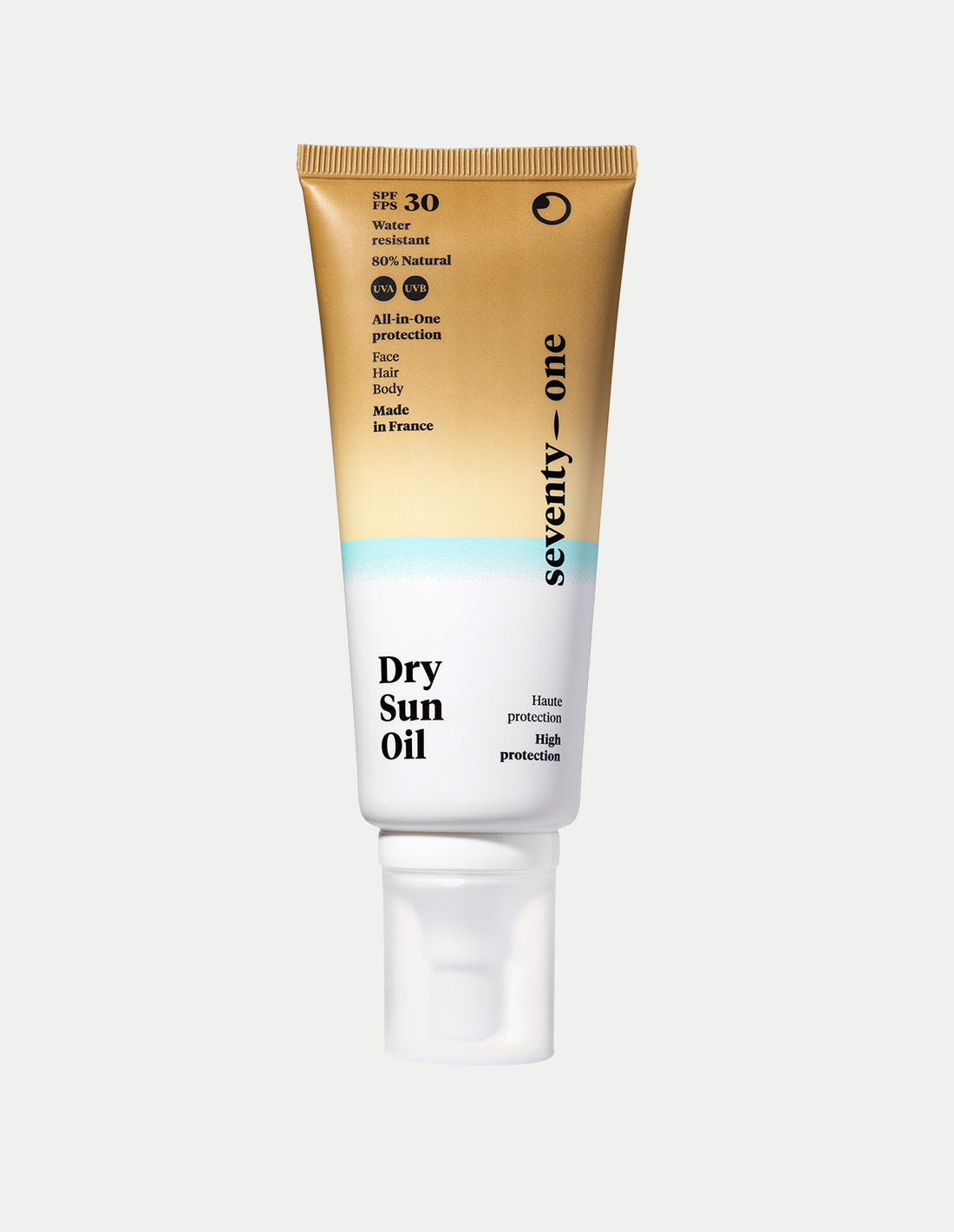
 Vendor:Dry Sun Oil SPF 30 UVA-8HSeventyOne Percent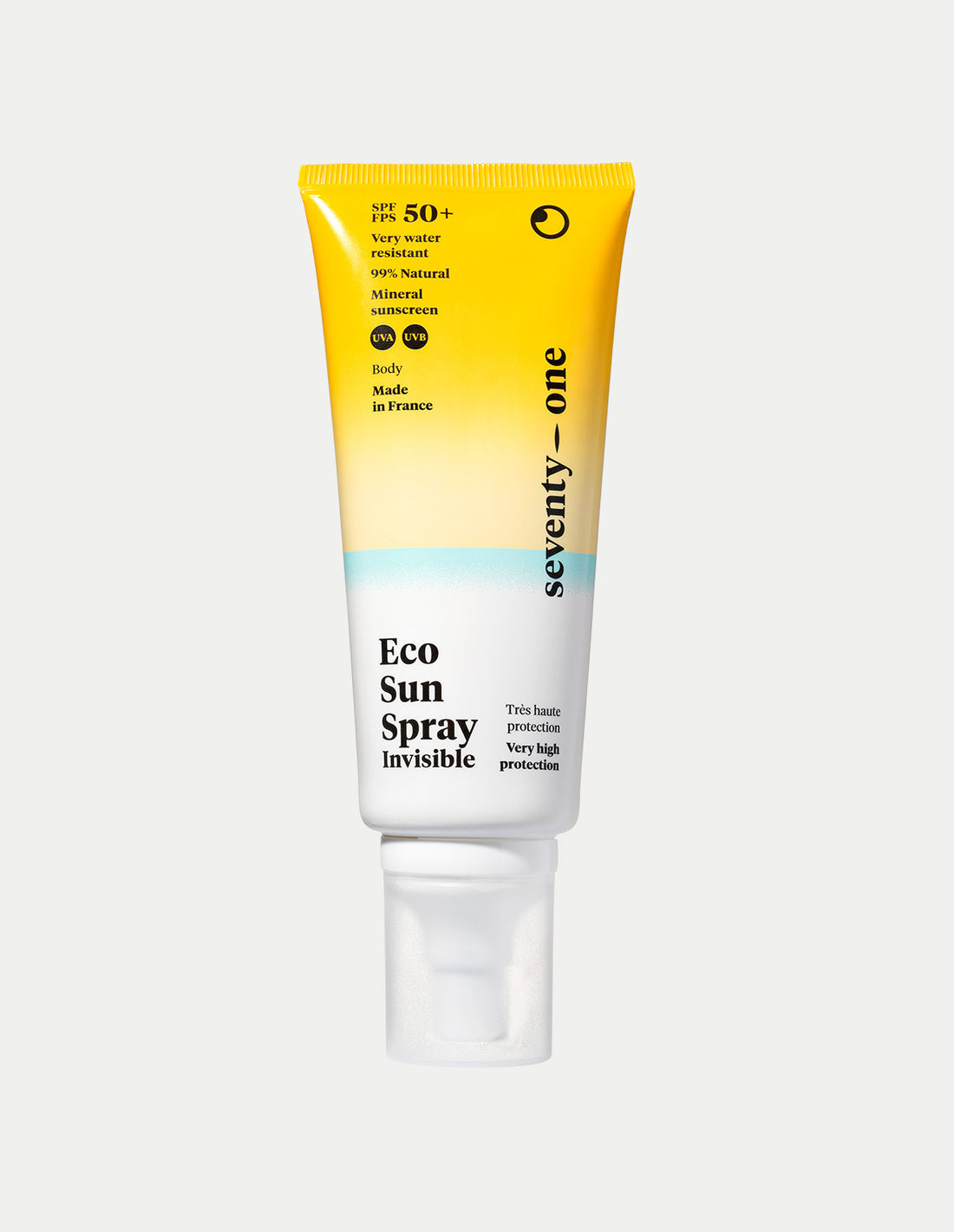
 Vendor:Eco Sun Invisible Spray SPF 50+SeventyOne Percent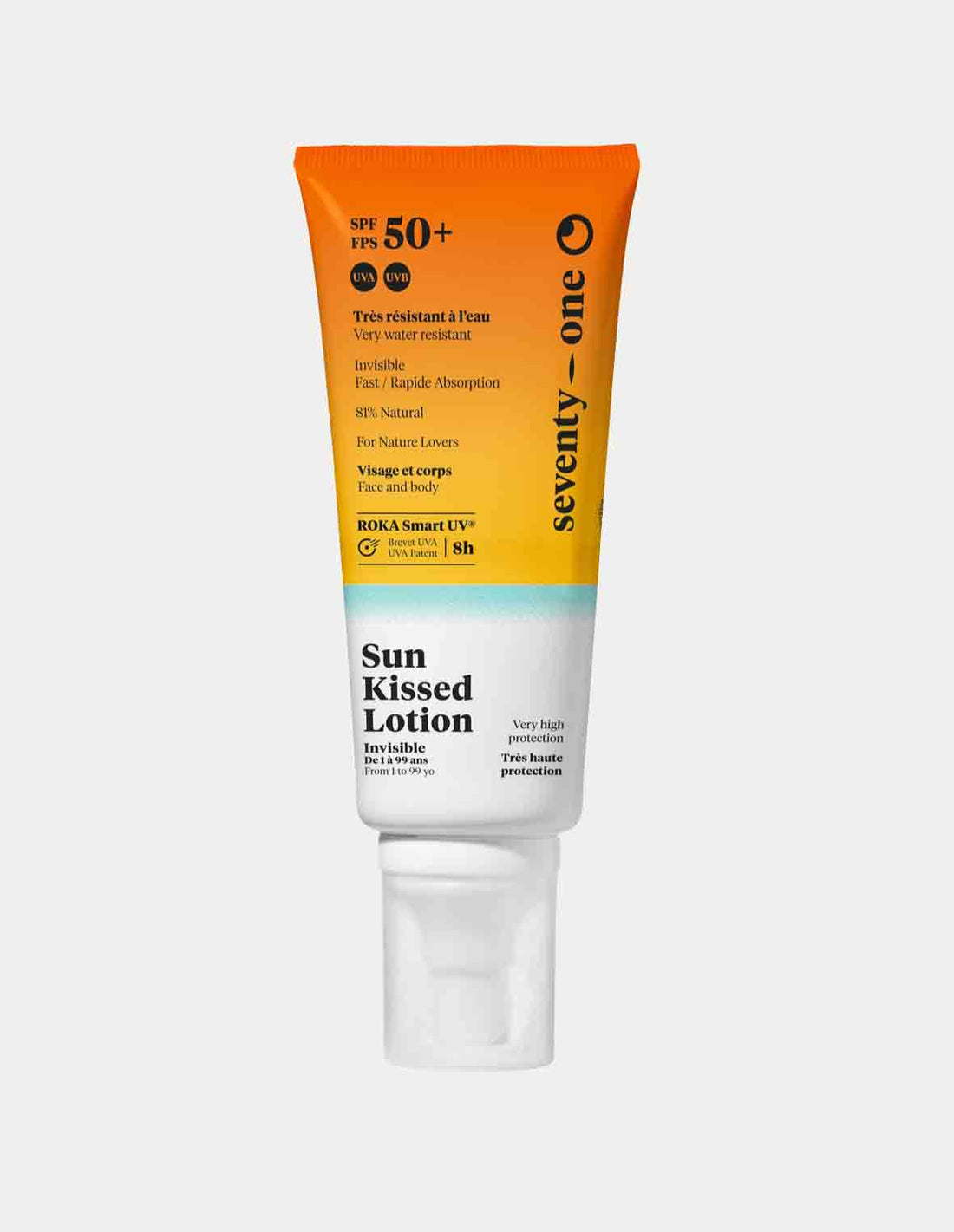
 Vendor:Sun Kissed Lotion SPF50+SeventyOne Percent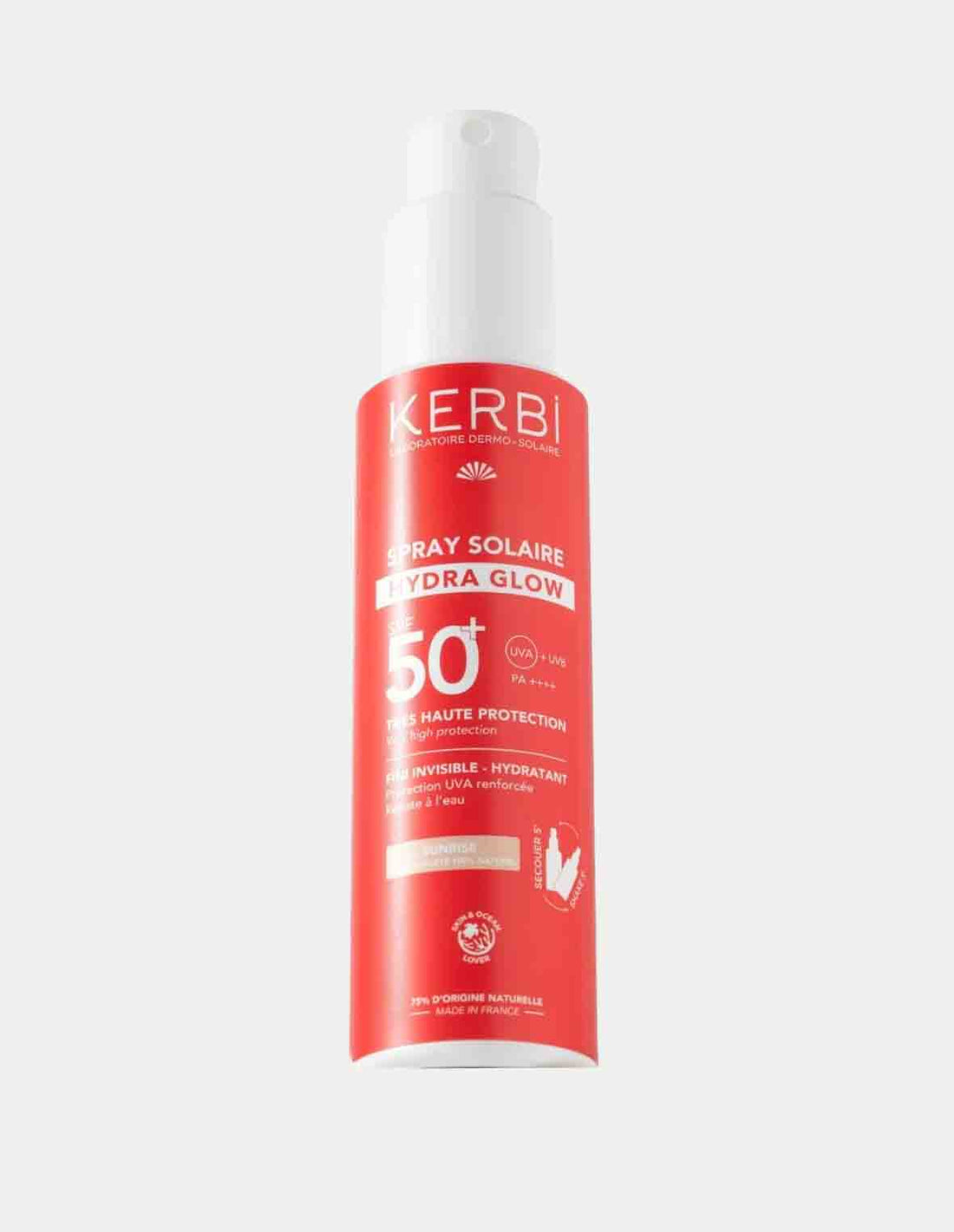
 Vendor:Sun Spray Hydra Glow SPF50+Kerbi
